A New Framework for the AI Age
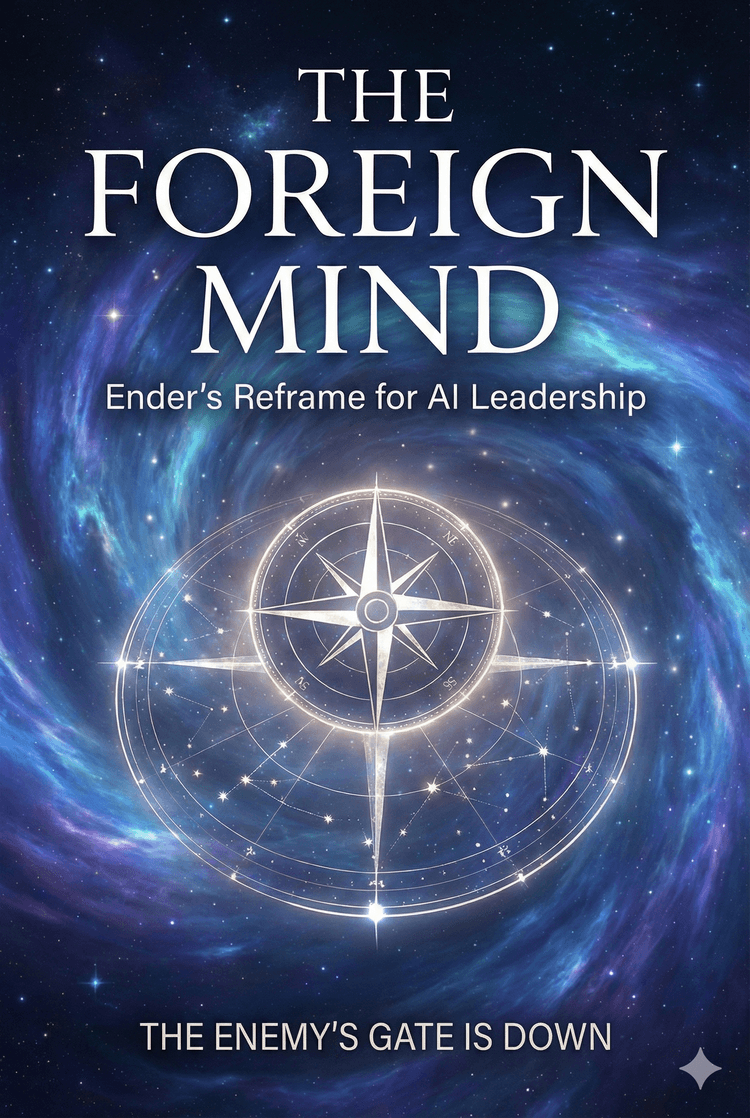
THE FOREIGN MIND
Ender's Reframe for AI Leadership
By Steve Harlow
“The skills that make you effective with AI are the skills that make you effective with people.”
Available now on Amazon Kindle
Buy on Amazon Kindle →Available now · Read on any Kindle device or the free Kindle app
The AI Paradox
Why do some professionals thrive with AI while others plateau?
It's not technical skill. The most sophisticated prompt engineers often produce mediocre results.
The difference is leadership.
AI is a Foreign Mind: genuinely different from human cognition, but reachable with the right approach.
The Framework at a Glance
The Foreign Mind framework distills AI leadership into five essential pillars — the same capabilities that enable all great leadership.
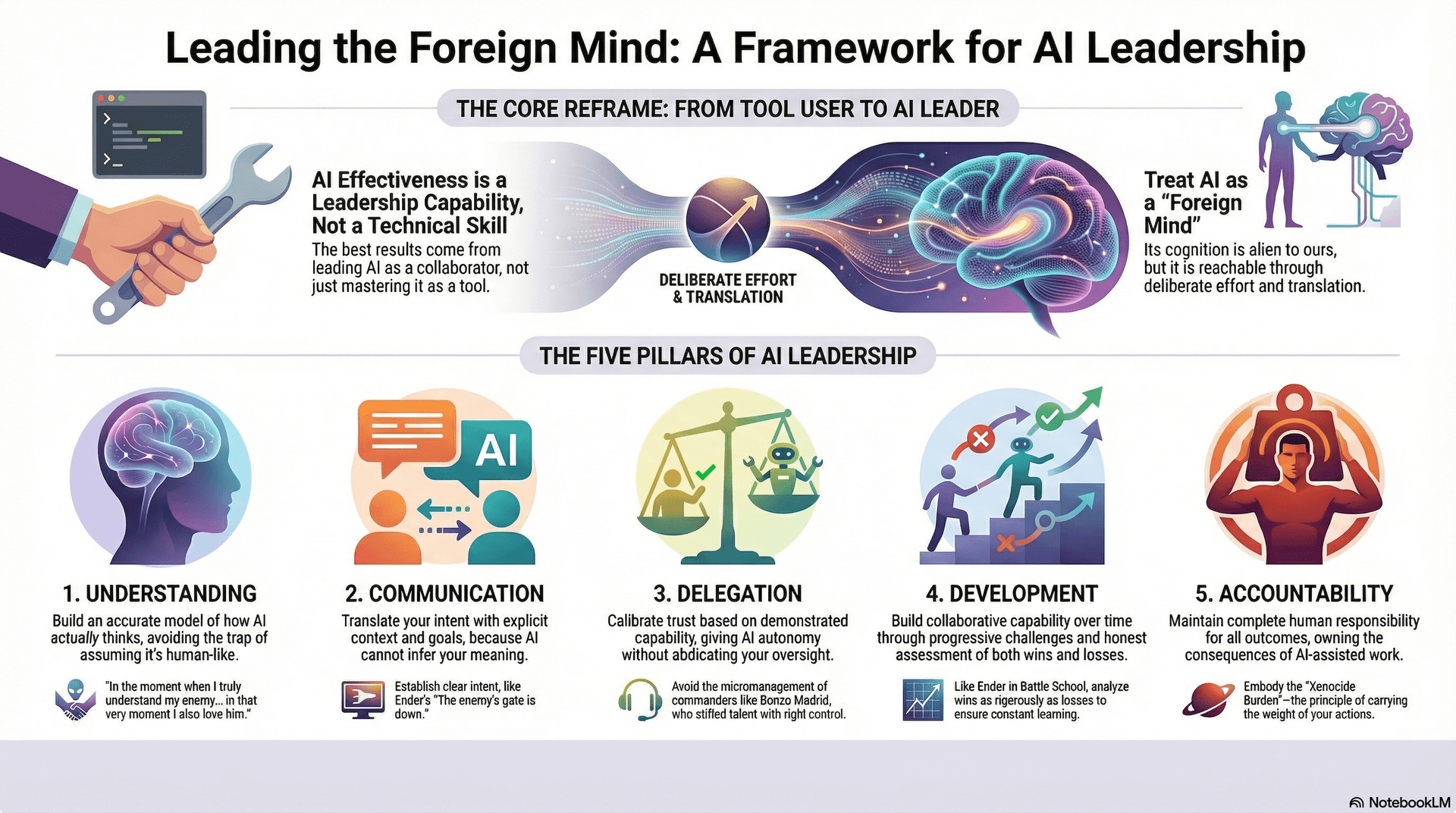
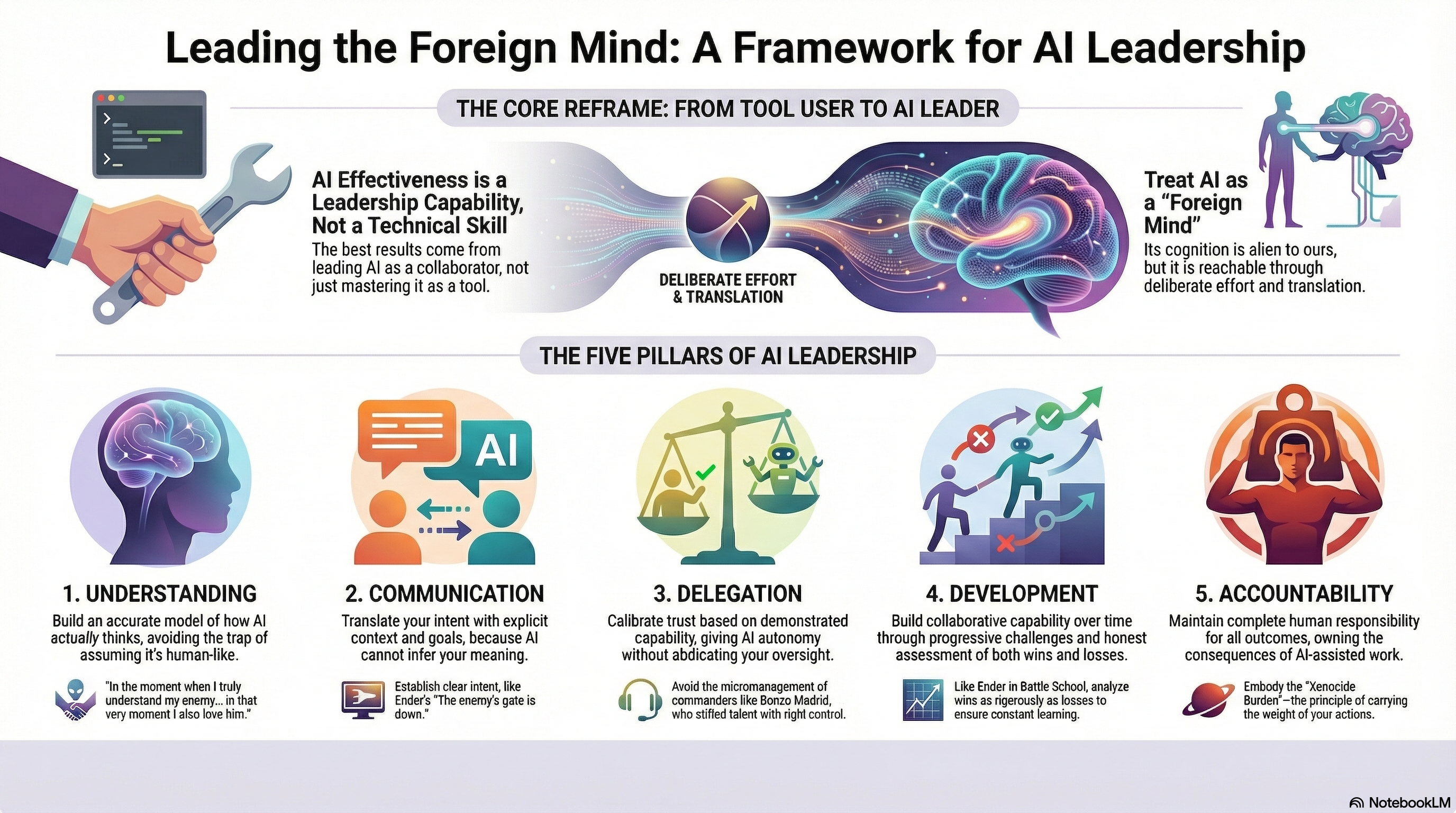
Each pillar builds on timeless leadership principles, adapted for genuinely foreign intelligence.
“In the moment when I truly understand my enemy, understand him well enough to defeat him, then in that very moment I also love him.”— Ender Wiggin, Ender's Game
Why Ender's Game?
Ender Wiggin defeated an alien species by understanding minds radically different from his own. He succeeded not through technical mastery of weapons, but by developing genuine empathy for an intelligence completely unlike humanity.
That same capability — applied ethically — is what AI collaboration demands.
The Enderverse provides a powerful lens for understanding how to work with genuinely foreign intelligence. The book draws on Card's “Hierarchy of Foreignness” to reframe AI as something neither tool nor threat, but a different kind of mind requiring different leadership approaches.
Haven't read Ender's Game? No problem — the book provides all the context you need, and might just inspire you to pick up the novel afterward.
What You'll Learn
Why AI effectiveness mirrors leadership effectiveness
How to model AI as a "Foreign Mind" you can actually collaborate with
The five pillars that separate AI leaders from AI users
Practical frameworks for trust calibration, intent translation, and honest assessment
How to avoid the 13 anti-patterns that derail AI collaboration
Strategies for individuals, teams, and organizational transformation
Go Deeper
Choose how you want to explore the framework:
Watch the Overview
7 minutes
See the book's layout and approach in a visual walkthrough of the Foreign Mind framework.
Listen to the Deep Dive
38 minutes
Hear a detailed exploration of the framework, the Ender connection, and practical applications.
Read a Sample Chapter
Free Preview
Experience the writing style and depth firsthand with selected chapters from the manuscript.
Download Sample (PDF)Who This Book Is For
Individual Practitioners
Seeking to excel with AI tools and develop genuine mastery
Team Leaders
Building and guiding AI-augmented teams
Executives
Driving organizational AI transformation
Lifelong Learners
Who believe leadership principles should apply to all forms of intelligence
Inside the Book
Part I: The Reframe
Establishes the AI leadership hypothesis and introduces the Enderverse framework
Part II: The Five Pillars
Two chapters per pillar — practical frameworks, anti-patterns, and Ender examples
Part III: Contexts
Application across individual mastery, team leadership, and organizational change
Part IV: Integration
Identity, future-proofing, and the call to lead responsibly
About the Author

Steve Harlow
Steve Harlow is a technology executive with twenty-five years of experience leading digital transformation. He has helped leaders across industries develop AI collaboration capabilities, translating complex technical concepts into practical leadership frameworks.
With experience at Amazon/Kindle and multiple Fortune 500 companies, Steve brings both strategic vision and hands-on implementation expertise to the AI leadership challenge.
Common Questions
Do I need to have read Ender's Game?
Not at all. The book explains every concept and provides all the context you need. The Enderverse simply offers a powerful lens for understanding AI collaboration — and you might find yourself wanting to read the novel afterward.
I'm not technical — is this book for me?
Absolutely. This is a leadership book, not a technical manual. If you lead people, manage projects, or want to work more effectively with AI tools, the frameworks apply regardless of your technical background.
Won't this be outdated as AI evolves?
The tools will change — that's certain. But the leadership fundamentals won't. Understanding, communication, delegation, development, and accountability are timeless principles. This book teaches you how to apply them to any AI system, present or future.
How is this different from other AI books?
Most AI books focus on prompts, tools, or technical capabilities. This book focuses on you — the leader. It's about developing the mindset and capabilities to lead any AI effectively, not memorizing techniques that expire with the next model update.
The tools will change.
The leadership fundamentals will endure.
Available now on Amazon Kindle
Buy The Foreign Mind on Amazon Kindle →Available now · Read on any Kindle device or the free Kindle app